

Home / History / Ten Gurus / Guru Tegh Bahadur Ji
Guru Tegh Bahadur Ji
Guru 9 of 10 · 1621–1675 · Defender of Religious Freedom
"He who is not frightened, nor frightens others — call him alone a wise man"
— Guru Tegh Bahadur Ji, Sri Guru Granth Sahib Ji
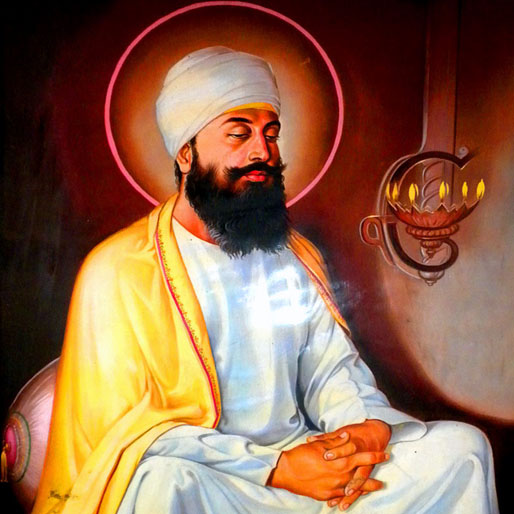
Quick facts
Born
1 April 1621, Amritsar, Punjab
Guruship
1665 – 1675
Title:
Hind di Chaadar (Shield of India)
Key contribution:
Martyrdom for religious freedom
Predecessor
Guru Harkrishan Sahib Ji
Successor
Guru Gobind Singh Ji
Passed away
11 November 1675, Chandni Chowk, Delhi
Principles
1. Fearlessness before tyranny and oppression
2. Defend the rights of all people
3. Worldly life is temporary — only God is eternal
Early life & Background
Guru Tegh Bahadur Ji was born on 1 April 1621 in Amritsar, Punjab, the youngest son of Guru Hargobind Ji. Before becoming the ninth Sikh Guru in 1665 — following the passing of Guru Harkrishan Ji — he spent many years in deep meditation and contemplation.
As Guru, he travelled widely across the Indian subcontinent, visiting Bengal, Assam, Bihar and Odisha to establish Sikh communities. Additionally, he composed 115 hymns and 57 slokas that the Guru Granth Sahib includes, many meditating on the nature of death, liberation and devotion to God.
Martyrdom for religious freedom
In 1675, a delegation of Kashmiri Pandits came to Guru Tegh Bahadur Ji in desperation. Mughal Emperor Aurangzeb was forcibly converting Hindus to Islam across the subcontinent. Although a Sikh himself, Guru Tegh Bahadur Ji agreed to defend their right to practise their own faith.
He declared that if Aurangzeb could not convert him — a Sikh — the Emperor should stop the forced conversions. Consequently, authorities arrested him, took him to Delhi, and gave him a stark choice: convert to Islam or face death. He chose death. On 11 November 1675, Aurangzeb had him publicly beheaded at Chandni Chowk, Delhi. Three devoted Sikhs who refused to renounce their faith were also killed alongside him.
Legacy & Contributions
Guru Tegh Bahadur Ji’s martyrdom stands as one of history’s great acts of defending religious freedom — not for his own faith, but for the right of all people to practise their beliefs freely. Sikhs honour him with the title ‘Hind di Chaadar’ — the Shield of India.
Gurdwara Sis Ganj Sahib in Chandni Chowk, Delhi, marks the site of his martyrdom and remains a powerful place of pilgrimage. Furthermore, his son, Guru Gobind Singh Ji, went on to found the Khalsa — transforming the Sikh community’s response to oppression forever.
Teachings & core message
Guru Tegh Bahadur Ji taught fearlessness in the face of tyranny and the duty to stand up for the rights of all people — even those of other faiths. He composed deeply meditative hymns on the impermanence of worldly things and the importance of living without fear of death.
