

Home / History / Ten Gurus / Guru Gobind Singh Ji
Guru Gobind Singh Ji
Guru 10 of 10 · 1666–1708 · Founder of the Khalsa
"Waheguru Ji Ka Khalsa, Waheguru Ji Ki Fateh. The Khalsa belongs to God, the victory belongs to God"
— Guru Tegh Bahadur Ji, Sri Guru Granth Sahib Ji
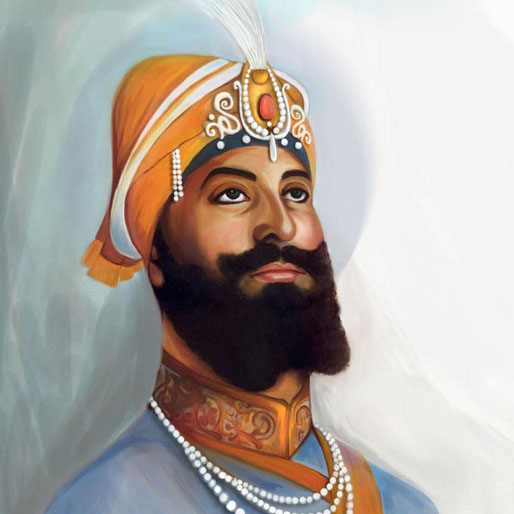
Quick facts
Born
22 December 1666, Patna Sahib, Bihar
Guruship
1675 – 1708
Key contribution:
Founded the Khalsa
Established:
The Five Ks (Panj Kakars)
Predecessor
Guru Tegh Bahadur Ji
Successor
Guru Granth Sahib (eternal Guru)
Passed away
7 October 1708, Nanded, Maharashtra
Principles
1. Every Sikh must be a saint and a soldier
2. The Khalsa serves God and protects the weak
3. The Guru Granth Sahib is the eternal living Guru
Early life & Background
Guru Gobind Singh Ji was born on 22 December 1666 in Patna Sahib, Bihar. As the son of Guru Tegh Bahadur Ji, he became the tenth and final human Sikh Guru at just nine years old — following his father’s martyrdom at the hands of the Mughal emperor. He grew into one of the most extraordinary figures in Sikh history: a warrior, poet, philosopher, and spiritual leader whose legacy continues to define the Sikh identity.
Fluent in many languages — including Punjabi, Persian, Sanskrit, Braj Bhasha and Arabic — he established a great centre of learning and poetry at Anandpur Sahib, where scholars and warriors trained side by side.
Guru Gobind Singh Ji had four sons:
- Baba Ajit Singh Ji
- Baba Jujhar Singh Ji
- Baba Zorawar Singh Ji
- Baba Fateh Singh Ji.
Founding of the Khalsa
On Vaisakhi, 13 April 1699, at Anandpur Sahib, Guru Gobind Singh Ji summoned a great gathering of Sikhs and asked who was willing to give their head for their faith. Five men stepped forward — the Panj Pyare, the Five Beloved Ones. He initiated them with Amrit — water sanctified with a double-edged sword — and gave them the Five Ks as articles of faith.
Remarkably, he then asked the five to initiate him in return, making himself equal to his followers in one of the most profound gestures in religious history. Furthermore, he gave all Sikh men the surname Singh (lion) and all Sikh women the surname Kaur (princess) — abolishing caste distinctions from Sikh identity forever.
The Eternal Guru & Legacy
Guru Gobind Singh Ji’s four sons — the Char Sahibzade — all gave their lives for the faith. His two elder sons died in battle at Chamkaur. His two younger sons, aged just nine and six, were bricked alive into a wall rather than convert to Islam — an act of extraordinary courage that Sikhs remember and honour every year.
Before his passing in 1708, Guru Gobind Singh Ji made a momentous declaration: there would be no eleventh human Guru. Instead, the Guru Granth Sahib would serve as the eternal, living Guru of the Sikhs for all time. Consequently, his legacy is inseparable from the scripture, the Khalsa, and the enduring Sikh commitment to justice, sacrifice and devotion to God.
Teachings & core message
Guru Gobind Singh Ji taught that every Sikh must be both a saint and a soldier — spiritually devoted and physically courageous. He established the Khalsa as a community of initiated Sikhs committed to defending truth and justice. He also declared that after him, the Guru Granth Sahib would be the eternal living Guru.
