

Dastar Bandi
The Turban Tying Ceremonyintroduction
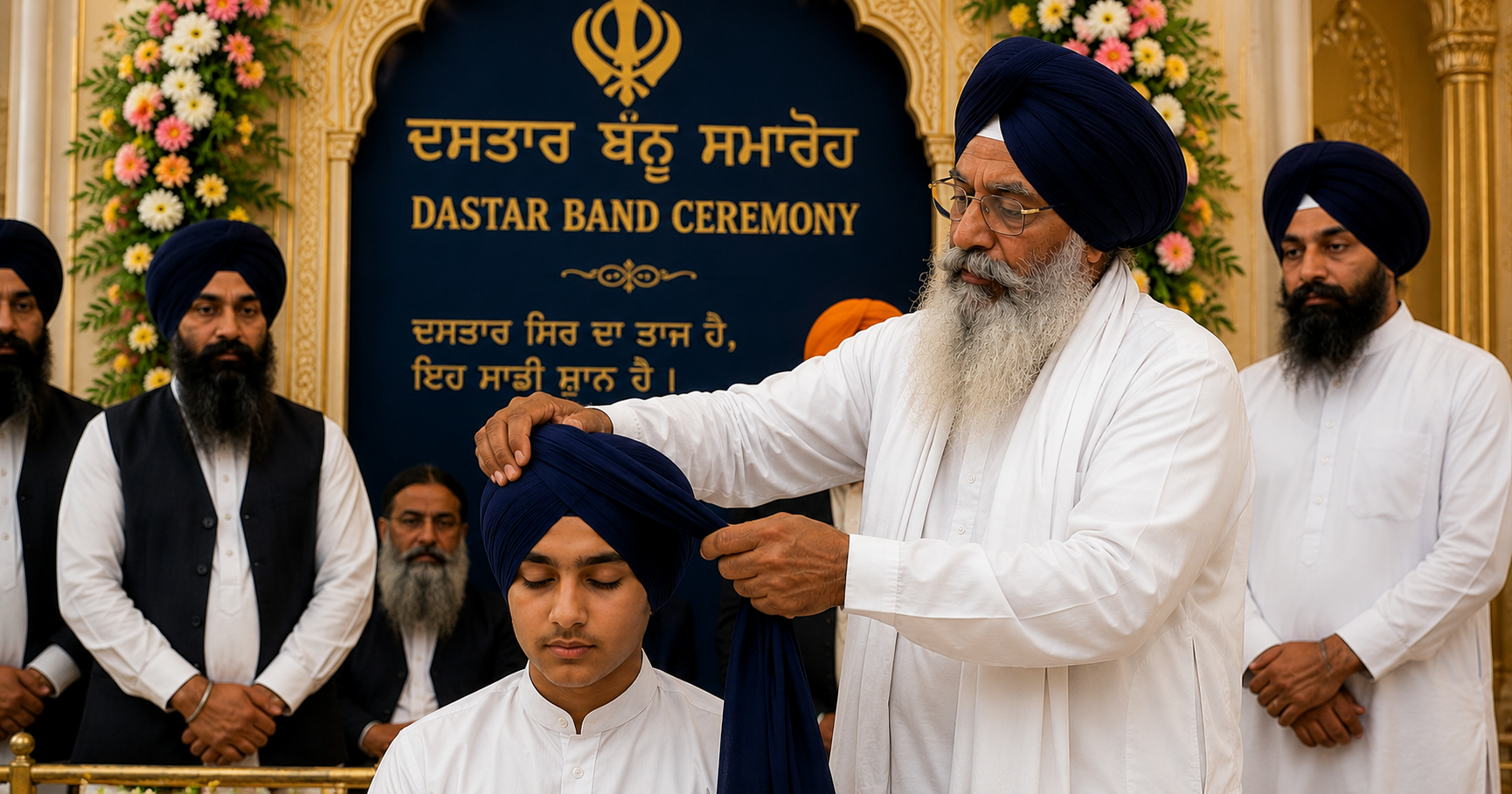
Dastar Bandi is the Sikh ceremony in which an elder ceremonially ties a turban on a young Sikh’s head for the first time — traditionally a boy. The word ‘Dastar’ means turban in Punjabi, and ‘Bandi’ means tying. Together, they name a ceremony that marks a profound milestone: the young Sikh’s formal assumption of the identity represented by the turban, one of the most recognisable and sacred articles of the Sikh faith. The Dastar is not merely a piece of cloth — it is a crown of honour, a symbol of dignity, courage, self-respect and sovereignty gifted to the Sikhs by Guru Gobind Singh Ji. For a young Sikh, the Dastar Bandi is therefore a deeply meaningful moment — a celebration of identity, faith and the beginning of a lifelong commitment to the Guru’s path.
What is the Dastar
The Dastar — the Sikh turban — is far more than a piece of cloth. In Sikhism, the founders of the religion mandated the turban as an article of faith. It represents honour, self-respect, courage, spirituality, and piety. Furthermore, the turban is inseparable from the Sikh identity — Sikhs have worn it since the time of Guru Nanak Dev Ji.
For Sikhs who have taken Amrit (initiated into the Khalsa), wearing the Dastar is a religious obligation. For other Sikhs, it is a deeply meaningful expression of faith and identity. Additionally, the turban serves a practical purpose — it neatly covers the Kesh, the uncut hair that forms one of the Five Ks of Sikhism.
When does Dastar Bandi take place
Dastar Bandi typically takes place when a young Sikh boy is ready to wear a turban — usually between the ages of 10 and 16. The Sikh Rehat Maryada prescribes no fixed age; instead, the family determines the timing based on the child’s readiness and maturity.
Many Sikh families hold the ceremony on a meaningful occasion — such as a Gurpurab (anniversary of a Guru’s birth or passing), Vaisakhi (the Sikh New Year and founding anniversary of the Khalsa), or a special family gathering.
The ceremony
The Dastar Bandi ceremony takes place in the Gurdwara, in the presence of the Guru Granth Sahib and the Sikh congregation. The family brings the young Sikh before the Guru Granth Sahib, and a respected elder — often the grandfather, an uncle, or a senior community member — ceremonially ties the first turban.
The congregation then offers Ardas (the Sikh prayer), asking for God’s blessings as the young Sikh takes on this new responsibility. The Granthi sings hymns from the Guru Granth Sahib, and the congregation distributes Kara Parshad to all present. Throughout the rest of the day, the young Sikh wears the turban with pride in celebration.
The significance of the ceremony
Dastar Bandi is a deeply significant moment for a young Sikh and their family. By tying the turban, the young person publicly declares their Sikh identity and their commitment to the values the Dastar represents — honour, courage, service, and devotion to God.
In Punjabi culture, the turban also carries the honour of the entire family. Traditionally, tying a turban on someone’s head was one of the highest gestures of respect one person could offer another. Consequently, when a young Sikh receives their first Dastar, the community honours them and formally welcomes them into the full responsibilities of Sikh identity.
A Crown of Faith
Dastar Bandi is a celebration of identity, faith, and heritage. Indeed, it marks the moment when a young Sikh steps forward to carry the visible symbols of their faith with pride. In doing so, they join a living tradition that Guru Nanak Dev Ji began over five centuries ago — and that continues to bind the Sikh community together today.
