

SIKH FESTIVALS
Celebrations of Faith, History & CommunityINTRODUCTION
Sikh festivals are joyful, spiritually significant occasions that bring Sikh communities together in prayer, celebration, and service. Unlike many religious festivals that are purely celebratory, Sikh festivals are deeply rooted in history — commemorating the births and passing of the Sikh Gurus, the founding of the Khalsa, and key events in the Sikh story. Each festival is an opportunity to reflect on the teachings of the Gurus, serve the community through Langar, and celebrate the gift of Sikh faith.
Sikh festivals are celebrated with great enthusiasm in Gurdwaras worldwide. The celebrations typically include Akhand Path (a continuous reading of the entire Guru Granth Sahib over 48 hours), Kirtan (devotional music), Nagar Kirtan (processions through the streets), Langar (free community meals), and Gatka (martial arts demonstrations). The entire community — Sikhs and non-Sikhs alike — is welcomed to participate.
Vaisakhi — The Most Important Sikh Festival
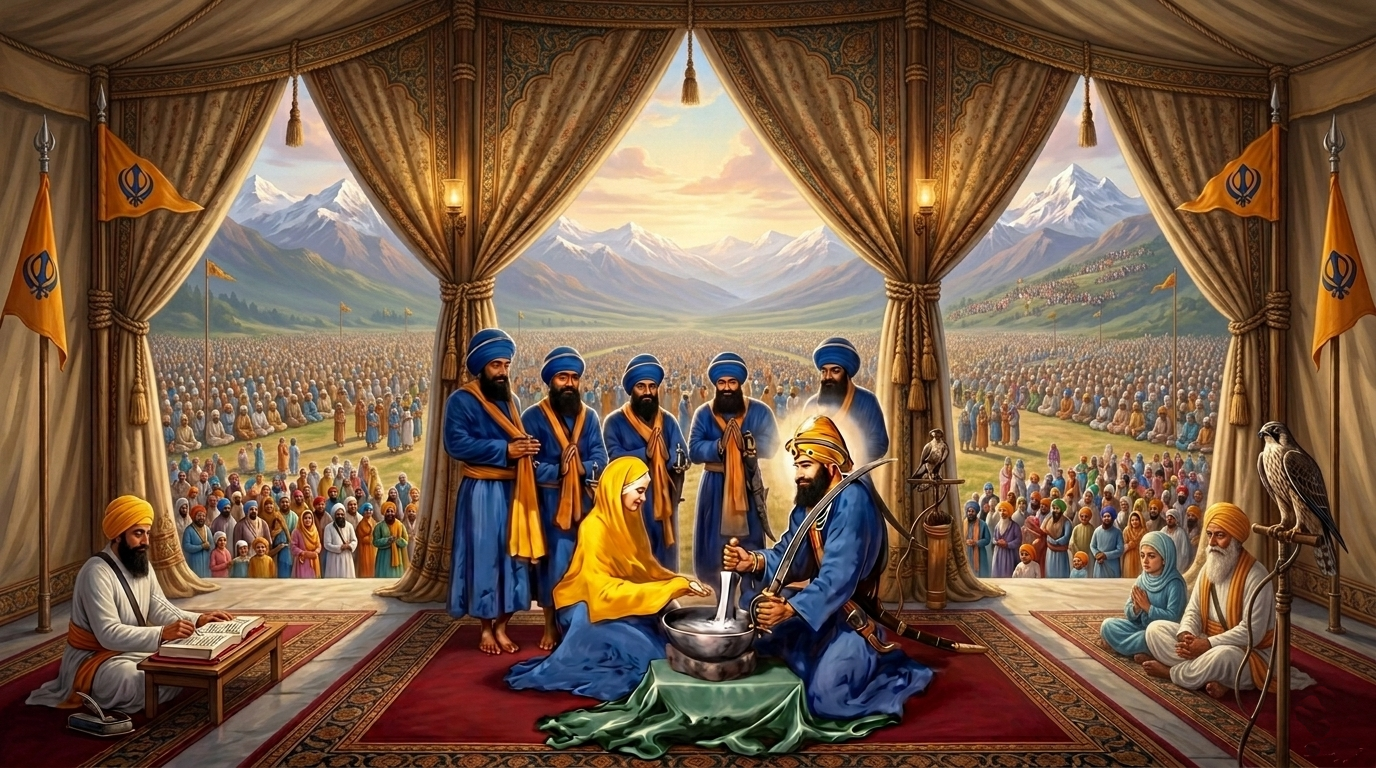
Vaisakhi — also spelled Baisakhi — is the most significant festival in the Sikh calendar. It is celebrated on 13 or 14 April each year and commemorates two deeply important events: the founding of the Khalsa by Guru Gobind Singh Ji on Vaisakhi 1699, and the traditional Punjabi harvest festival that has been celebrated in the Punjab for thousands of years.
On Vaisakhi, 13 April 1699, Guru Gobind Singh Ji summoned a great gathering of Sikhs at Anandpur Sahib. He asked who among them was willing to give their head for the faith. One by one, five men stepped forward — they became the Panj Pyare (the Five Beloved Ones). Guru Gobind Singh Ji initiated each of them into the Khalsa with Amrit (sacred water).
Remarkably, Guru Gobind Singh Ji then knelt before the five and asked them to initiate him in return — establishing the profound principle that Guru and Sikh are equal before God. This founding of the Khalsa is the central event commemorated at every Vaisakhi celebration.
Vaisakhi celebrations include Akhand Path (the 48-hour continuous reading of the Guru Granth Sahib), early morning Kirtan, Nagar Kirtan processions through city streets, Amrit Sanchar ceremonies where new Sikhs join the Khalsa, Gatka martial arts demonstrations, and Langar served freely to all.
Additionally, in the Punjab, Vaisakhi marks the wheat harvest — farmers give thanks and celebrate with Bhangra and Giddha folk dances. As a public holiday in Punjab, Vaisakhi draws enormous gatherings across the world, particularly in Amritsar, London, Vancouver, and Toronto.
Gurpurabs — Anniversaries of the Sikh Gurus
Gurpurabs are anniversaries associated with the lives of the ten Sikh Gurus — their birth anniversaries (Parkash Utsav) and the anniversaries of their passing (Jyoti Jot). The word “Gurpurab” combines “Guru” and “Purab” (festival/anniversary). These occasions are observed with great reverence and celebration in Gurdwaras worldwide. Upcoming Gurpurabs →
Guru Nanak Dev Ji's — Parkash Purab
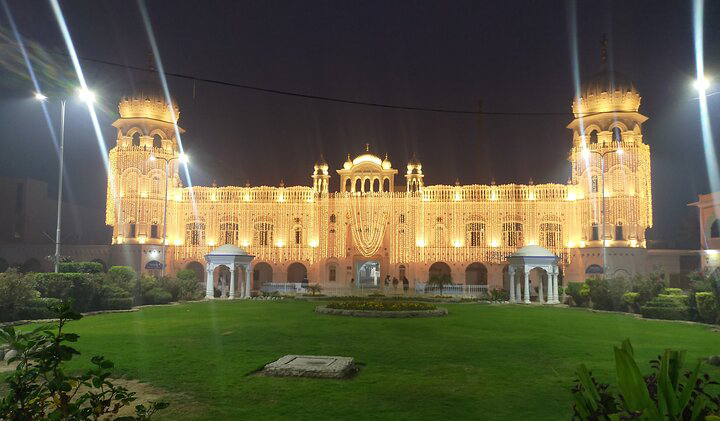
The birth anniversary of Guru Nanak Dev Ji — founder of Sikhism and the first of the ten Sikh Gurus — is the most widely celebrated Gurpurab in the Sikh calendar. It falls on the full moon day of the month of Kartik (October/November). The celebrations begin three days earlier with a continuous Akhand Path — an unbroken reading of the entire Guru Granth Sahib. Followed by early morning Kirtan before dawn, Nagar Kirtan processions through the streets, and Langar served freely to all.
Gurdwaras worldwide light up with decorations, and the Golden Temple in Amritsar draws hundreds of thousands of pilgrims. For Sikhs, this occasion is not simply a birthday celebration. Furthermore, it is a renewal of commitment to Guru Nanak Dev Ji’s central message: the oneness of God, the equality of all people, and the importance of selfless service.
Guru Gobind Singh Ji's — Parkash Purab
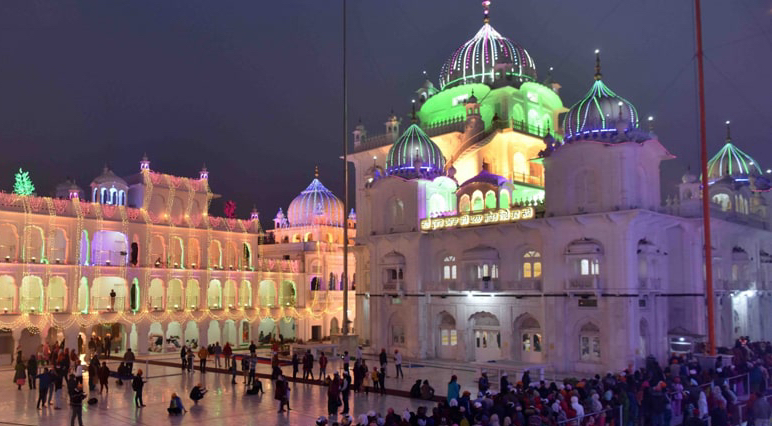
The birth anniversary of Guru Gobind Singh Ji — the tenth and final human Sikh Guru — falls in December or January according to the Nanakshahi calendar. Sikhs celebrate it with particular devotion because Guru Gobind Singh Ji holds a uniquely beloved place in Sikh history. He founded the Khalsa in 1699 and led the Sikh community through some of its darkest hours as a fearless warrior. He was also a gifted poet who composed thousands of verses now collected in the Dasam Granth. Furthermore, he made the supreme sacrifice of his four sons — the Char Sahibzade — for the Sikh faith.
He also declared the Guru Granth Sahib as the eternal and living Guru. This ended the line of human Gurus and placed spiritual authority in the sacred scripture forever. Celebrations include Akhand Path, Kirtan, Nagar Kirtan, and Langar.
Guru Arjan Dev Ji's Shaheedi Gurpurab
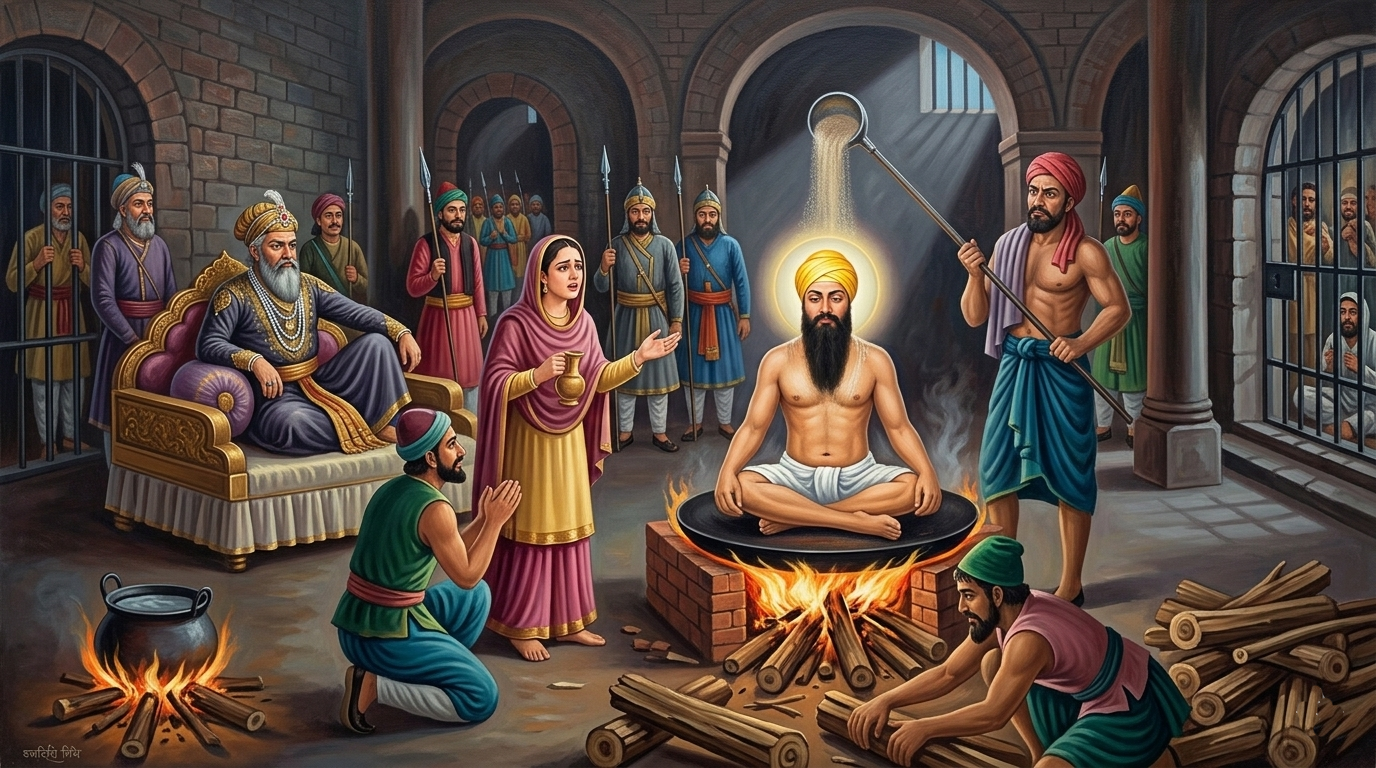
Sikhs observe the martyrdom anniversary of Guru Arjan Dev Ji — the fifth Sikh Guru and the first Sikh martyr — in May or June. Guru Arjan Dev Ji compiled the original Adi Granth (predecessor of the Guru Granth Sahib), built the Golden Temple in Amritsar, and stands as one of the greatest spiritual figures in Sikh history. Mughal Emperor Jahangir ordered his arrest and torture in 1606. Guards forced him to sit on a burning hot iron plate in the height of summer while pouring hot sand over him.Throughout his ordeal, he recited Gurbani with complete serenity.
A deeply moving tradition marks this Gurpurab: Sikhs set up Chhabeel stalls outside Gurdwaras and on street corners, freely distributing cool, sweet Sharbat to passersby — a compassionate act of remembrance for the burning heat Guru Arjan Dev Ji endured.
Guru Tegh Bahadur Ji's Shaheedi Gurpurab
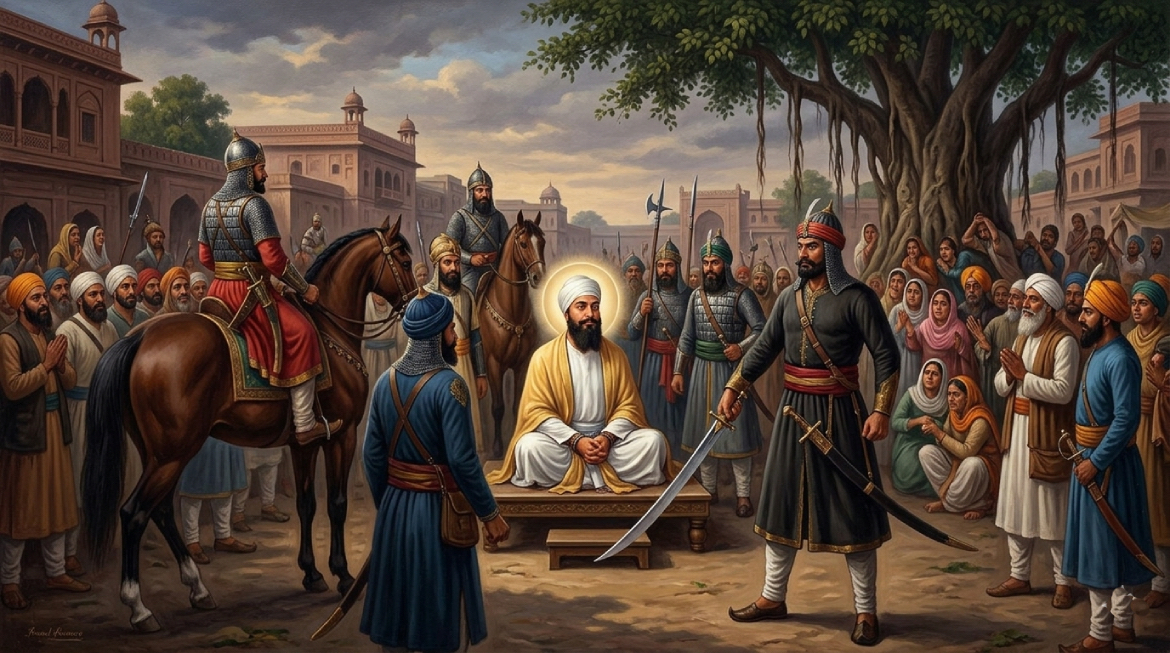
Sikhs observe the martyrdom anniversary of Guru Tegh Bahadur Ji — the ninth Sikh Guru — in November or December. It is one of the most solemn and moving occasions in the Sikh calendar. In 1675, Guru Tegh Bahadur Ji sacrificed his life in Delhi — not to defend Sikhism, but to protect the right of Kashmiri Hindus to practise their own faith freely. A delegation of Kashmiri Pandits came to him in despair. They were unable to resist forced conversion to Islam. Guru Tegh Bahadur Ji declared he would stand as their protector.
Aurangzeb’s forces publicly executed him at Chandni Chowk in Delhi. The Gurdwara Sis Ganj Sahib stands at that site today. The Gurdwara Sis Ganj Sahib stands at that site today. Sikhs remember him as Hind di Chaddar — the Shield of India — and regard his sacrifice as one of the most extraordinary acts of inter-faith compassion in all of religious history.
Hola Mohalla — The Festival of Sikh Martial Arts
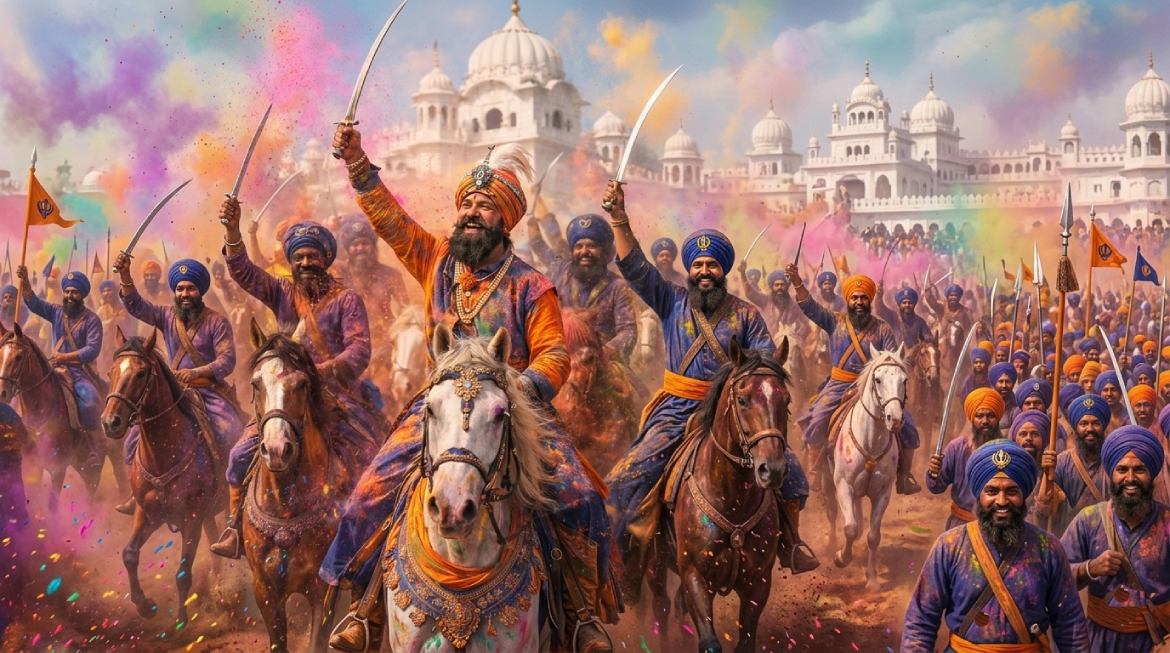
Guru Gobind Singh Ji established Hola Mohalla in 1701 — a uniquely Sikh festival held one day after the Hindu festival of Holi. While Holi celebrates colours and spring, Guru Gobind Singh Ji designed Hola Mohalla as a day for Sikhs to practise and display their martial skills. The name combines “Hola” (mock battle) and “Mohalla” (organised procession).
Anandpur Sahib — the historic city where the Khalsa was founded — hosts the main celebrations every year. They feature spectacular Gatka demonstrations, horse riding, archery competitions, and poetry recitations. Nihang Sikhs, members of a traditional Sikh warrior order, travel from across India wearing their distinctive blue uniforms and towering turbans. Consequently, Hola Mohalla at Anandpur Sahib draws hundreds of thousands of pilgrims and ranks among the most spectacular festivals in South Asia.
Bandi Chhor Divas — The Sikh Festival of Lights
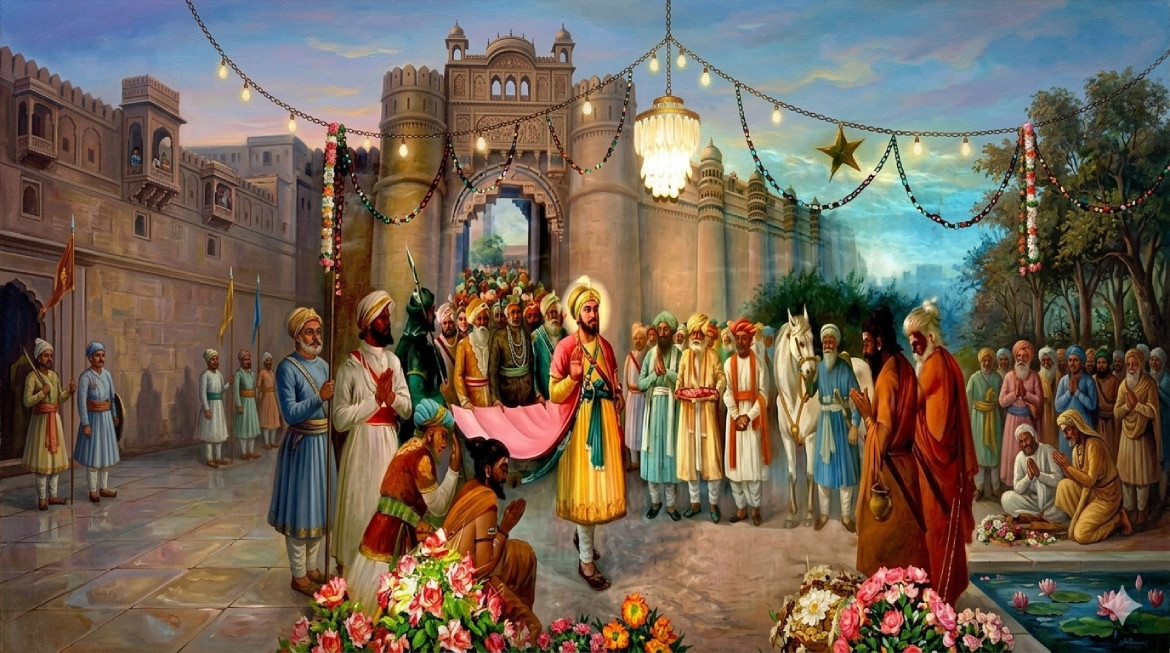
Bandi Chhor Divas — meaning “Prisoner Release Day” — falls on the same day as the Hindu festival of Diwali (October/November). It commemorates the return of Guru Hargobind Ji, the sixth Sikh Guru, to Amritsar after Mughal Emperor Jahangir had imprisoned him at Gwalior Fort.
When the order for his release came, Guru Hargobind Ji refused to leave without the 52 Hindu princes held alongside him. He had a special robe made with 52 long tassels — each prince held a tassel and walked out with him to freedom. The Sikh community welcomed him home by lighting the streets of Amritsar with lamps. To this day, Sikhs mark Bandi Chhor Divas with illuminations, fireworks, and the spectacular lighting of the Golden Temple.
Diwali in the Sikh Tradition
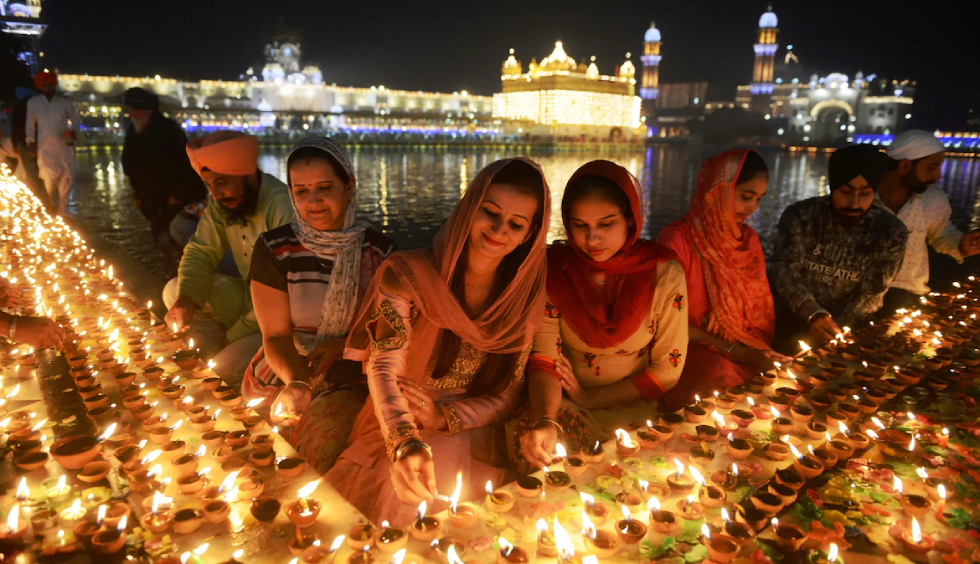
While Diwali is primarily a Hindu festival, it carries deep significance in Sikh history. Guru Ram Das Ji laid the foundation stone of the Golden Temple on Diwali in 1577, and several Sikh Gurus held important gatherings at this time of year. As a result, for Sikhs, Diwali and Bandi Chhor Divas have merged into a single celebration — marked by the illumination of Gurdwaras, fireworks, and communal Langar. During this period, the Golden Temple shines spectacularly, drawing enormous crowds of pilgrims and visitors from across the world.
The Nanakshahi Calendar
Sikhs observe their festivals according to the Nanakshahi calendar — a solar calendar the Shiromani Gurdwara Parbandhak Committee (SGPC) adopted in 2003 and named in honour of Guru Nanak Dev Ji. This calendar anchors most Gurpurabs and Sikh festivals to fixed solar dates, so they fall on the same Gregorian date every year. This represented a significant reform — previously, many Sikh festivals followed the lunar calendar and landed on different dates annually, as Diwali and Holi still do.. View the Nanakshahi Calendar →
A Year of Remembrance & Joy
Sikh festivals are not separate from everyday Sikh life — they are its highest expression. Each Gurpurab, each Vaisakhi, each Diwali celebrated as Bandi Chhor Divas is a moment when the community stops, gathers, and remembers who they are and where they come from. The prayers, the Kirtan, the Langar, the processions — all of it flows from the same source: a deep and joyful gratitude for the lives and sacrifices of the ten Gurus who gave the Sikhs their faith, their identity, and their way of life.
Sikh Culture
Festivals are the heartbeat of Sikh culture - explore how Sikhs celebrate and live their faith.
Read More →Five Takhats
Major Sikh festivals are celebrated at the Five Takhats - the seats of Sikh authority.
Read More →Punjabi Radio
Listen to live Gurbani kirtan and Sikh programming from around the world.
Listen Now →