

Anand Karaj
The Sikh Wedding Ceremony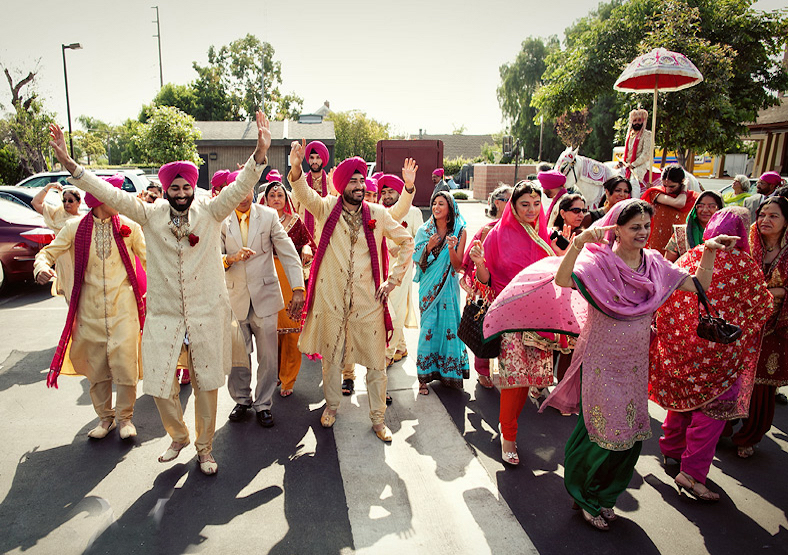



introduction
Anand Karaj — meaning ‘blissful union’ or ‘act of bliss’ — is the Sikh wedding ceremony. It is one of the most sacred and joyful ceremonies in Sikhism, uniting two people not just in marriage but in a shared spiritual journey toward God. The ceremony centres entirely on the Guru Granth Sahib — the eternal living Guru — and takes place in the presence of the Sikh congregation.
Guru Ram Das Ji — the fourth Sikh Guru — composed the Lavan, the four sacred verses at the heart of the ceremony. Although the Anand Karaj formally gained recognition as the Sikh wedding ceremony in the early 20th century, its spiritual roots therefore stretch back to the Guru’s own compositions.
Milni — the meeting of families
Before the main ceremony, many Sikh families observe the tradition of Milni — a formal meeting of both families. Male members of each family meet, embrace, and exchange garlands in a joyful occasion that symbolises the merging of two families into one.
Typically, the Milni takes place in the Gurdwara courtyard or langar hall before the wedding begins. It is a warm and often deeply emotional occasion — one that recognises the joining of two families and the beginning of new lifelong relationships.
The Lavan — four sacred rounds
The central act of the Anand Karaj is the Lavan — four sacred verses Guru Ram Das Ji composed and included in the Guru Granth Sahib. During the ceremony, the couple circles the Guru Granth Sahib four times, once for each verse, while the Ragis (musicians) sing the Lavan and the Granthi recites them.
Each of the four Lavan describes a stage in the soul’s journey toward union with God, using the metaphor of marriage. Specifically, the first Lavan speaks of beginning the spiritual journey and fulfilling one’s duties. The second describes the meeting of the Guru. The third speaks of the bliss of divine love. Finally, the fourth describes the complete union of the soul with God — the ultimate goal of Sikh spiritual life.
The ceremony
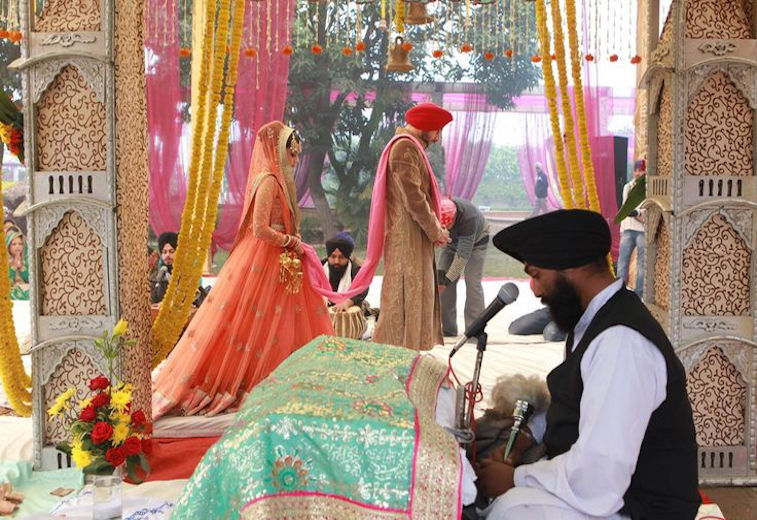
The Anand Karaj takes place in the Gurdwara in the presence of the Guru Granth Sahib. The couple sits before the Guru Granth Sahib, with the bride on the left and the groom on the right. The ceremony opens with Ardas (prayer) and Kirtan (devotional hymns).
Before the Lavan begin, the Granthi explains the significance of the ceremony to the couple and the congregation. The bride’s father or a senior family member then places a garland (Palla) over the groom’s shoulder and hands one end to the bride — symbolising her willing entry into their shared spiritual journey.
As the Granthi sings each Lavan, the couple circles the Guru Granth Sahib together, joined by the Palla. Each circle is not a ritual — it is a living commitment made before God, with the Guru as spiritual witness. By circling the Guru Granth Sahib, the couple acknowledges that the Guru is the centre of their life and the source of all spiritual guidance they will need on their journey together. After the four rounds, the Granthi recites Anand Sahib and offers Ardas to conclude the ceremony.
◆ In the first round
The Guru asks the partners to:
- Commit to righteousness.
- Renounce sinful actions.
- Remember, mediate and embrace Naam.
- Only by good fortune, is real peace obtained and Lord seems sweet to the mind.
- Worship the one Waheguru and all your sins will vanish.
◆ In the second round
The Guru asks the partners to advance further towards meeting the True Guru – God:
- The Lord leads you to meet the True Guru, the Primal Being – the enlightener
- Have fear of fearless God and your ego will disappear
- Sing God’s praises and feel His presence before you.
- God is everywhere, outside and within, sing in Joy
◆ In the third round
The Guru says that the partners mind is filled with “Divine Love”:
- Meeting the Sadh Sangat (Holy Congregation)
- Speak the Word of the Lord’s Bani.
- Which is only obtained by good fortune
- Recite Gurbani and sing the Glorious Praises of the Lord
- The Naam will vibrates and resounds within your heart
- And you will know your future destiny.
◆ In the final round
The Guru says that the partners mind become peaceful and they will have found the Lord:
- God’s Will seems sweet to these Gurmukhs.
- You will lovingly focus your consciousness on the Lord, day and night
- All your desires will be fulfilled
- The Souls will blend with Waheguru and only Naam will occupy your heart.
After the four rounds are complete, Anand Sahib is recited and Ardas is offered. Read more about Laava →
Significance of the Anand Karaj
The Anand Karaj is fundamentally different from civil or other religious marriages. It is not primarily a legal or social contract — it is a spiritual union. The couple commits not only to each other but to walking the path toward God together, with the Guru Granth Sahib as their eternal guide.
India formally recognised the Anand Karaj as a distinct and valid form of marriage through the Sikh Marriage Act of 1909. Additionally, many countries around the world now legally recognise the ceremony. It reflects the Sikh value of equality — both partners circle the Guru Granth Sahib together, affirming that husband and wife are equal partners in the eyes of God.
Blissful union
The Anand Karaj is a deeply moving ceremony that places God and the Guru at the centre of marriage. By circling the Guru Granth Sahib four times, the couple declares that their love for each other is rooted in their shared love for the divine. Consequently, their journey through life will always draw guidance from the light of the Guru’s teachings.
