

Home , History , Ten Gurus , Guru Hargobind Ji
Guru Hargobind Ji
Guru 6 of 10 · 1595–1644 · The Warrior Guru — Miri and Piri
"The Guru is the ladder, the Guru is the boat, and the Guru is the raft to cross the world-ocean."
— Sri Guru Granth Sahib Ji
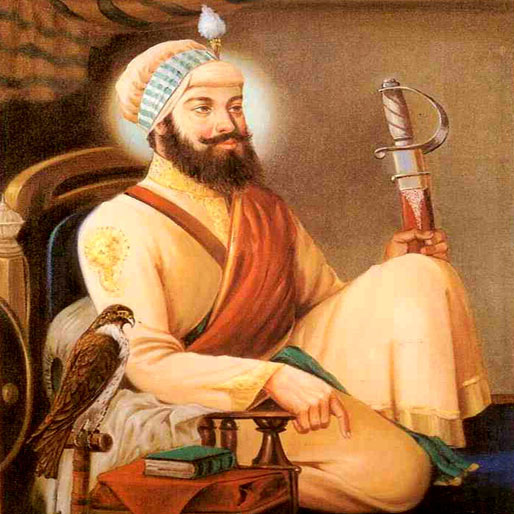
Quick facts
Born
19 June 1595, Wadali, Punjab
Guruship
1606 – 1644
Key contribution
Introduced Miri Piri doctrine
Built
Akal Takht, Amritsar
Predecessor
Guru Arjan Dev Ji
Successor
Guru Har Rai Ji
Passed away
3 March 1644, Kiratpur Sahib
Principles
1. Miri — Temporal strength and justice
2. Piri — Spiritual devotion and wisdom
3. Both must be held in perfect balance
Early life & Background
Guru Hargobind Ji was born on 19 June 1595 in Wadali, Punjab. He became the sixth Sikh Guru at just eleven years old following the martyrdom of his father, Guru Arjan Dev Ji. His father’s execution at the hands of the Mughal Empire fundamentally changed the direction of Sikhism.
Where previous Gurus had focused on spiritual teaching and peaceful community building, Guru Hargobind Ji recognized that the Sikh community needed to be able to defend itself. He transformed the community by introducing a military dimension alongside its deep spiritual tradition.
Miri Piri & the Akal Takht
Guru Hargobind Ji wore two swords at his investiture — one representing Miri (temporal, worldly authority) and one representing Piri (spiritual authority). This was a revolutionary declaration that Sikhs must be strong in both dimensions of life — not just spiritual but also capable of defending justice.
He built the Akal Takht — Throne of the Timeless — directly opposite the Golden Temple in Amritsar. This became the seat of Sikh temporal authority and the highest seat of Sikh governance. It remains so to this day. He trained Sikhs in military arts and maintained a small army, engaging Mughal forces in several battles.
Bandi Chhor & legacy
Guru Hargobind Ji was imprisoned in Gwalior Fort by Emperor Jahangir. When his release was finally ordered, he refused to leave unless 52 Hindu princes imprisoned with him were also released. The Emperor agreed, and he secured their freedom by having each prince hold onto his cloak as they walked out together. This act is celebrated as Bandi Chhor Divas — Prisoner Release Day — now observed alongside Diwali every year.
He passed the Guruship to his grandson, Guru Har Rai Ji, in 1644.
Teachings & core message
Guru Hargobind Ji introduced the doctrine of Miri-Piri — that a Sikh must be equally strong in worldly affairs (Miri) and spiritual life (Piri). He wore two swords to symbolize this balance. This teaching remains fundamental to Sikh identity and is represented in the Khanda symbol.
