

Home , History , Ten Gurus , Guru Amar Das Ji
Guru Amar Das Ji
Guru 3 of 10 · 1479–1574 · Champion of Equality & Social Justice
"He alone is a true Sikh who meditates on the Name of the Lord with every breath and morsel of food"
— Guru Amar Das Ji, Sri Guru Granth Sahib Ji
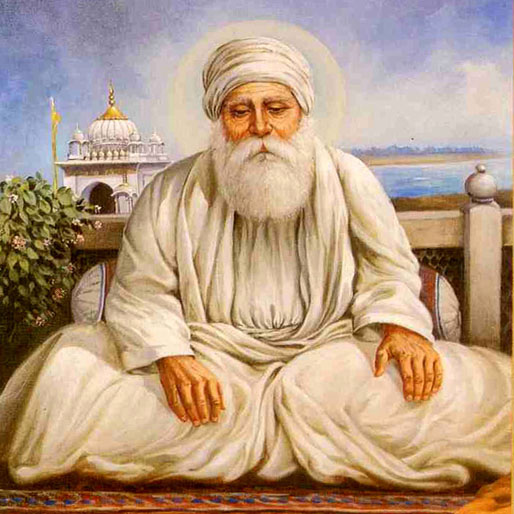
Quick facts
Born
5 May 1479, Basarke, Punjab
Guruship
1552 – 1574
Key contribution
Institutionalized Langar and equality
Established
Manji system of missionaries
Predecessor
Guru Angad Dev Ji
Successor
Guru Ram Das Ji
Passed away
1 September 1574, Goindval
Principles
1. Equality — All sit together in Langar
2. Reject Sati and purdah
3. Women equal to men in God's eyes
Early life & Background
Guru Amar Das Ji was born on 5 May 1479 in Basarke village, Punjab. Remarkably, he became the third Sikh Guru at the age of 73, having spent decades as a devoted Sikh before Guru Angad Dev Ji chose him as successor. His long life of humble service and devotion made him deeply beloved by the community.
Before becoming a Sikh, Guru Amar Das Ji had been a devout Hindu for decades. His encounter with Guru Nanak’s hymns — heard being recited by Guru Angad Dev Ji’s daughter — transformed his life completely. Consequently, he began serving Guru Angad Dev Ji with extraordinary devotion.
Social Reforms
Guru Amar Das Ji stands as one of the most socially progressive figures in Sikh history. He established a rule that everyone — regardless of caste, religion or social status — had to sit in Langar and eat together before receiving his audience. This directly challenged the rigid caste hierarchy of the time.
Furthermore, he spoke out actively against the burning of widows (Sati) and the veiling of women (purdah). He appointed both men and women as leaders of his Manji system — a network of 22 preaching districts that spread Sikhism far beyond the Punjab. Additionally, he established the tradition of Sikh congregational gatherings at Vaisakhi and Diwali.
Legacy & Contributions
Guru Amar Das Ji composed 869 hymns that appear in the Guru Granth Sahib, making him one of its most prolific contributors. He also established the town of Goindval as a centre of Sikh learning and pilgrimage.
In 1574, he passed the Guruship to his son-in-law, Guru Ram Das Ji — beginning the tradition of the Guruship remaining within the Sodhi family for the remaining seven Gurus.
Teachings & core message
Guru Amar Das Ji was a powerful champion of social equality. He required everyone — including kings and nobles — to sit together in Langar before his audience. He spoke firmly against Sati, purdah and caste discrimination, declaring that all people are equal before God. In doing so, he laid much of the social foundation on which Sikhism’s commitment to equality continues to stand today.
